
Producer
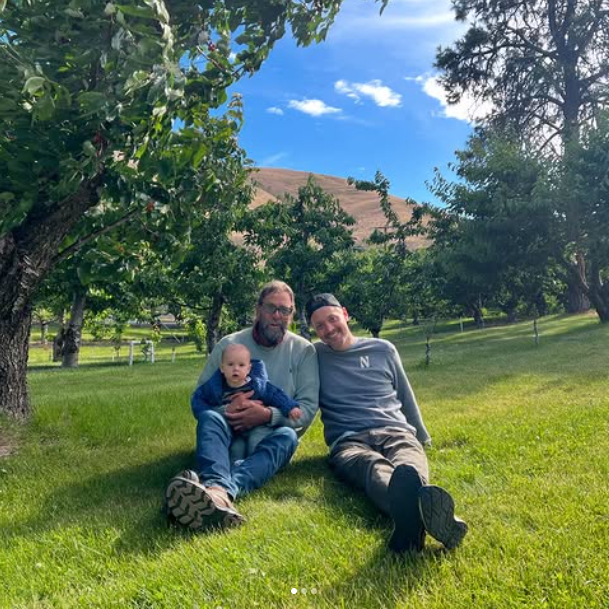
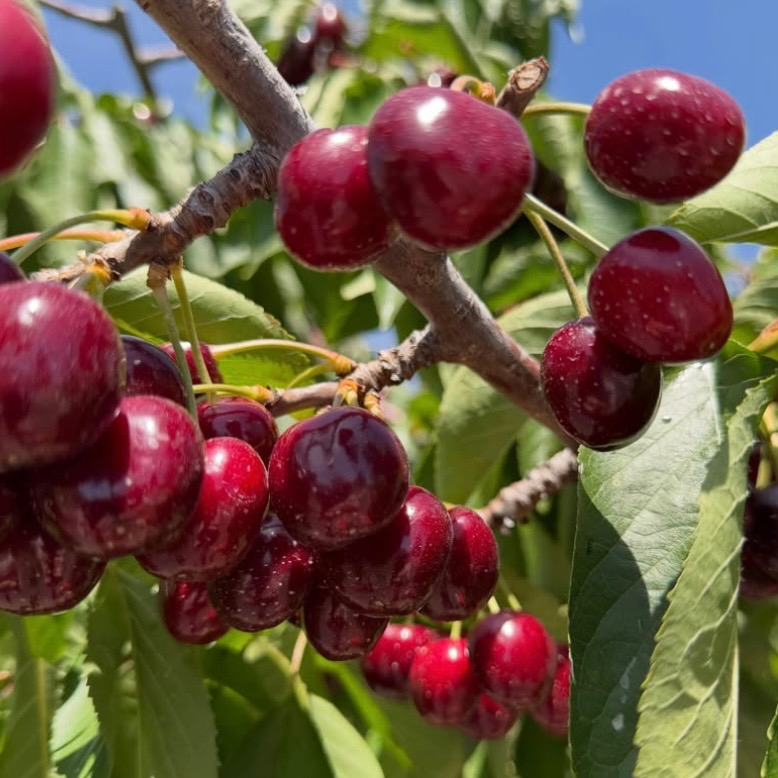
Dime Acres is two orchards in North Central Washington, worked by chef David Nichols and family across three generations. We’ve farmed this ground for thirty-five years — long enough to know which blocks freeze first and which trees lie about being done. We grow cherries, apples, pears, a little stone fruit, and walnuts on land we live on. That last part matters more than it sounds.
The Two Farms: Sleepy Hollow Farms sits on the Wenatchee River. It’s where we grew up and learned how to sweat; David and Kate live there now. Eagle Rapids Orchards is the bigger of the two, strung along the Columbia. Our parents live there. If you want to know what quiet sounds like, that’s the place. Together they make Dime Acres.
What We Grow: Cherries are the heart of it — the crop we chase every harvest. Apples and pears are the steady work. Plums, apricots, and nectarines come in smaller numbers. And there’s a walnut grove that more or less looks after itself.
Chef David's former restaurant in Seattle, Eight Row, was a nod to the largest, highest quality cherry rating on a standard cherry scale. Farmstand is delighted to bring you fruit from the Nichols family!
We describe our general approach to farming as natural, minimal, and healthy – four generations live in the orchard, and responsible land management is paramount. Whether the specific block of fruit is organic or not, we try to use the smallest possible dosage of any treatment. We don’t use certain organic treatments which we deem extreme (there are viruses etc available these days, and organic pesticide is a big industry).
We think family farms are about the best thing that can happen to a piece of land. You tend a place differently when it’s also your home — when the water you irrigate with runs past your own back door. That isn’t a slogan. It’s just how it works. We farm block by block, because no two blocks want the same thing. Some are certified organic. Some are practicing organic. Some we manage with a light hand. Across all of them we’re careful to a fault about treatments. When we do reach for something — even an organic-approved product — we put it where it’s needed, in small amounts, and nowhere else. The point is to leave the rest of the orchard’s life, the bees and the soil and everything we can’t see, alone.
We have two plots - Eagle Rapids and Sleepy Hollow. Our cherries at Eagle Rapids are transitioning organic, and in 2027 they will be certified organic. Our cherries at Sleepy Hollow are neither transitioning nor organic, but its our lowest intervention crop. Some years we apply nothing, because we see no urgent need. The wind by the river and aggressive pruning helps keep the trees dry. However, we will use small dosage treatments to target very specific threats, whether because the threat is observed in our crop, or perhaps because the risk becomes high regionally. Minimal sulphur and spinosad are the two treatments which we’ve most commonly used in the past several years. These are common organic treatments, although we can’t confirm whether the specific products we used were “certified” organic, because we don’t track that there (most are these days). Spinosad is naturally derived from the fermentation of the soil bacterium Saccharopolyspora spinosa.
We’ve also used strobilurins in the face of mildew outbreak at Sleepy Hollow. Strobilurins are a fungicide originally found to be produced by a small forest mushroom (strobilurus tenacellus). Perhaps the process of natural extraction is expensive, because as far as we can tell the ones we have used are all synthetic analogs, and are not permitted in certified organic farming—we do not use them at Eagle Rapids for that reason.