Rainier Fruit
Rainier Fruit
About Us
The Rainier story begins in the late 1800s when the Zirkle family migrated west to Washington State’s Columbia Basin. The deep, mineral-rich soils and plentiful mountain water provided an exceptional landscape for farming many agricultural products – most especially, apples. The family and their dozen children worked the land to make a living, growing apples and hay as well as quarrying rock for local buildings.
A few generations later, the family committed to farming apples commercially as Washington was quickly becoming a leading agricultural growing region. The desire to grow the best fruit, provide first-rate customer service and treat people right motivated the Zirkles in all things. The family founded Rainier Fruit Sales in 1974 to handle the sales and marketing of the fruit, which is still proudly owned and operated by the Zirkle family.
Practices
For Rainier Fruit, sustainability isn’t merely about checking boxes or green-colored packaging. It’s a way of life based on the forward-thinking desire to maintain the land for future generations. We know that Mother Nature employs the best farmers and we aim to create a mutually beneficial relationship with her most powerful partners: pollinators, natural decomposition, and sunshine. Our aim is to create a mutually beneficial relationship with these farmers, working together in tandem with nature.
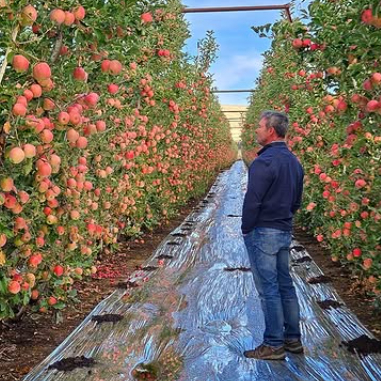
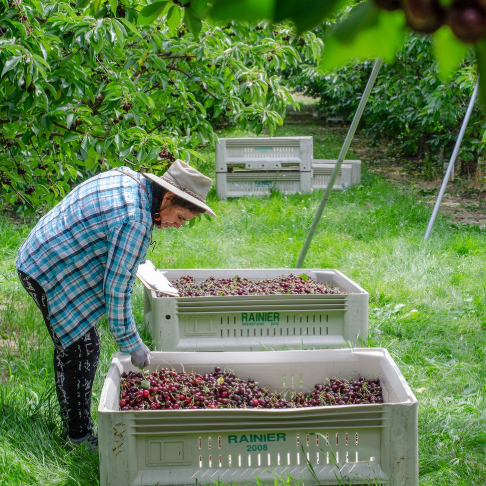
We love our little corner of the world. Being protected by the Cascade Mountain range creates some of the most unique microclimates on the planet. Because of this, we can fine-tune our farming practices down to a science. We utilize our desert climate up and down the central spine of the state as it stretches from the Oregon to the Canadian border. Rainier ranches dot Washington, each ranch growing a variety of apple, pear, cherry, or blueberry in their ideal climate. Varieties of apples like Honeycrisp that thrive in colder climates are grown in high-elevation regions of the state, while our blueberries and cherries and apples like Envy and Pink Lady thrive in our warmer southern ranches. Nature provides these unique growing regions, we are simply using them in a way that works best: the way nature intended.